Skip to content

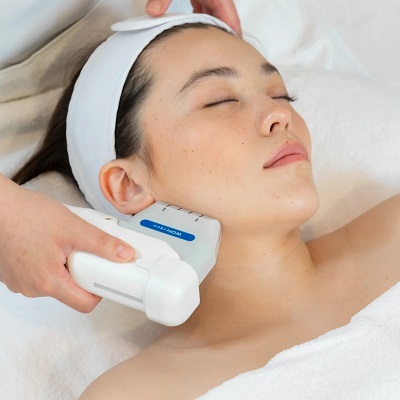
The beauty industry has dedicated a lot of its resources to non-invasive treatment in pursuit of a more youthful, lifted appearance. One of the leaders is the High-Intensity Focused Ultrasound (HIFU). It is also known as the lunchtime facelift, and it is said to tighten the skin and give jawlines a definition without having to make a single incision.
But is HIFU really good on your face, or is it just another fad? One has to know the science, the outcomes, and the safety profile of this sophisticated technology to make an informed decision.
What Exactly is HIFU?
HIFU uses concentrated ultrasound energy to target the deep structural layers of the skin. HIFU goes through the upper dermis and penetrates the SMAS (Superficial Muscular Aponeurotic System), unlike lasers, which target the surface. This is the very layer of tissue that is touched by surgeons when they do a standard facelift.
Upon impact of the ultrasound energy on this layer, it forms micro-thermal points. This stimulated heat causes your body to naturally respond to the heat by producing new collagen and elastin. The effect is an inside-out tightening and lifting effect.
The Major Advantages: What Makes HIFU the Choice of People:
To people who are not sure about surgery or Botox, HIFU will have some strong benefits:
- Natural-Looking Results: Since HIFU is based on your own collagen, the process is not immediate or frozen. You appear to be a fresh version of yourself.
- No Downtime: You can actually get the procedure done and go directly to the workplace. Bandages are absent, stitches are absent, and the level of post-treatment redness is minimal.
- Fat Reduction: HIFU can also be adjusted to a tightening effect, although there are small areas of stubborn fat that the device can select, including a double chin or jowl.
- Longevity: Although it is not as long-lasting as surgery, the outcome of one session may take 12-18 months.
Is HIFU Right for You?
Although HIFU is an effective tool. Its success is greatly determined by your age and the quality of your skin.
- The Ideal Candidate: Dr. Ayusha Khan suggests HIFU to those aged 30-50 years old with mild-moderate skin laxity. It works great in taking the drooping eyelids, neck tightening, and in smoothing out the marionette lines on the mouth.
- When to Be Cautious: HIFU is not always able to give the dramatic effect of lift to extremely sagging skin or deep wrinkles, so when discussing these cases, it is best to be cautious. Moreover, in case you possess a very thin face and subcutaneous fat is minimal, you should use the services of an expert, because high-energy settings may sometimes lead to additional loss of fat volume.
How Does the Process Feel?
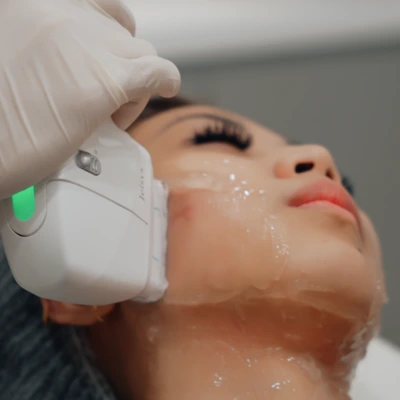
When you are under treatment, it can give you small discharges of heat or a tingling. It is defined by some people as small electric pulses. Royal Cosmetic Surgery Clinic Islamabad applies topical numbing cream or cooling gels to make sure that you are comfortable during the 30-90-minute session.
Safety and Side Effects:
HIFU has a good safety record clinically. Nevertheless, it is a medical-grade procedure that can only be done by a qualified doctor with approved equipment. Side effects are minimal and short-term:
- A few hours of slight redness.
- Light swelling or tenderness for several days.
- A temporary tingling sensation.
There are dire complications, including nerve bruising or fat atrophy, but they are extremely rare and happen mainly due to the presence of an inexperienced technician and wrong depth settings.
The Verdict: Is It “Good” for Your Face?
This is a resounding yes, as long as you have realistic expectations. One of the best non-surgical methods that you can use to keep your face contoured and skin elastic as you grow older is HIFU. It is a kind of preventative to the younger patients and a rejuvenating tool for the older ones.
However, the worst type of treatment is always the one that fits your own particular facial structure. It is important to always have your provider do an in-depth analysis of your skin before making a booking to be certain that your skin is thick enough and has enough elasticity to withstand the ultrasound energy.