Ear surgery is a topic that raises a common question amongst patients, particularly those who are first-time patients undergoing ear surgery preparation. Among the most common questions is, Do you need to shave your head for Ear Surgery? The positive thing is that the process of ear surgery have make greatly nowadays, and complete head shaving is not often needed. The surgeons today are concerned with areas of precision, minimum disturbance, and comfort of the patient without being hampered by the right surgical hygiene.
Understand how hair management during ear operations can contribute to anxiety reduction and enable patients to prepare without fear. The practice will rely on the kind of ear surgery, the location of the incision, and the mode of treatment. Hair preservation has become a priority with qualified plastic surgeons and new clinical procedures.
Why Hair Shaving is Usually Not Required During Ear Surgery?
Previously, it was common to remove large portions of hair in order to be sterile. But this has been altered by developments in microsurgical equipment, enhanced procedures in sterilization, and better planning of incisions. The majority of ear surgery is done with the help of small slits taken behind the ear so that the surgeons do not have to disturb the hair around the ear.
Surgeons have switched from shaving with medical-grade adhesive tape, sterile gel,s or parting hair carefully to maintain the surgical field’s hygiene. This contemporary practice will preserve appearance, accelerate emotional healing, and enhance patient satisfaction in general.
Procedure Specific Hair Management in Ear Surgery:
The shaving requirement differs with the procedure. The following is an explicit statement of the way in which hair is normally processed in various ear surgeries.
Otoplasty and Ear Reshaping Procedures:
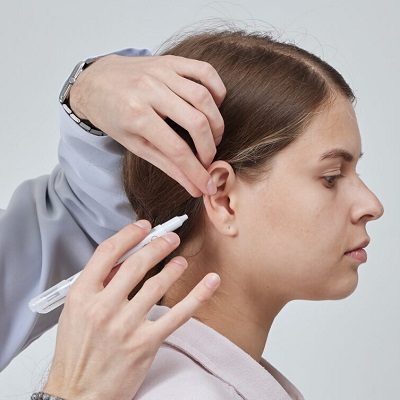
Ear pinning (also referred to as ear reshaping) involves otoplasty, which practically never involves shaving. The cut is done in the natural crevice at the back of the ear, thus making it inconspicuous. The hair is merely tied behind the area or pinned. Patients can resume their daily lives with no signs of any surgery, and this is very reassuring, particularly to adults and teenagers.
Tympanoplasty and Mastoid Surgery Approach:
Shaving is usually not allowed in such cases where the surgery involves the middle ear, like in tympanoplasty or mastoidectomy. Surgeons apply adhesive tapes or gel to keep the hair out of the incision area. This procedure is clean, and the patient’s hairstyle of the patient is not compromised. These modern methods of ENT and plastic surgery put the focus on both medical and cosmetic comfort.
Cochlear Implant Surgery Consideration:
Surgery Cochlear implants can involve shaving a very small area of hair, which is normally one or two centimeters behind the ear. This is a private part that can be concealed as soon as the hair grows back. Head shaving is not done at all, and the majority of the patients do not notice the change.
Acoustic Neuroma Surgery Hair Guidelines:
During surgery with acoustic neuroma, a small region behind the ear can be shaved off based on the access to the surgery. Surgeons seek to reduce hair removal even in these complicated procedures. Shaving of the head is not common and is only performed when required by medical reasons or when requested by the patient.
Experience of Dr Husnain Khan in Ear Surgery:
Dr. Husnain Khan is a very qualified plastic surgeon with more than 17 years of clinical experience, who performs advanced cosmetic and reconstructive surgery and pays attention to detail. His ear surgery philosophy is centered on accuracy, natural outcome, and comfort for the patient.
Dr. Husnain Khan works in the international best practices of hair preservation and minimally invasive surgery with a good academic background and a large amount of surgical exposure. His skills in ensuring functional correction, coupled with the aesthetic result, are advantageous to the patients, as they guarantee a natural appearance and a self-confident statement.
Important Factor That Indicates Hair Shaving Needs:
There are a few factors that determine whether or not there is a necessity of hair trimming before ear surgery.
- Type of ear surgery being undergone.
- Whereabouts of the surgical incision.
- Hairlength and thickness of the patient.
- Instruments and techniques of surgery.
- Personal cleanliness and safety issues.
Appearance and Recovery of Ear Surgery:
Patients are glad to realize that their hairstyle is not significantly affected by the surgery. In the case of minor hair trimming, it grows very fast. Bandages are typically fitted in a discrete way, and most of the patients can afford to resume their social lives within a short duration. Normal appearance following surgery has a beneficial effect on emotional status and the general healing process. That is one of the reasons why head shaving surgery today is no longer the standard of choice.
Is It Safe To Avoid Shaving Before Ear Surgery?
Yes, avoiding shaving is deemed to be secure when clean methods are adhered to. Surgeons apply special skin preparation fluids and protective attire to keep the surgical area clean. It is a method that is consistent with international standards of surgical safety and causes no risk of infection.