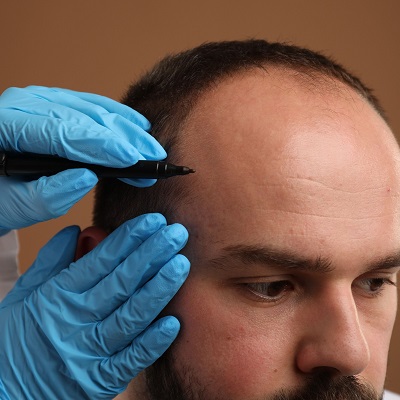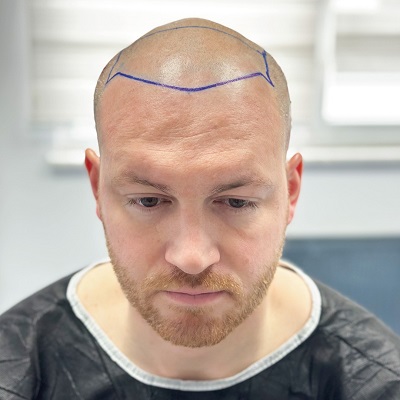

Getting a hair transplant surgery is an investment for a lifetime. You will, of course, want to clean up the sides or keep them looking good as your hair starts growing back in the weeks after the operation. Nevertheless, among the most widespread questions asked is: Can I use a trimmer after a hair transplant?
The answer to this is yes, but only when it is really important. Premature clipping may detach the delicate grafts or may leave a permanent scarring effect. To ensure your procedure is successful, you must adhere to a rigorous post-operative grooming schedule.
Why Timing is Everything for Grafts Protection?
In the initial days following a hair transplant, your new hair implants are technically mini-skin grafts. They are yet to take root in the blood or the scalp tissue. The first 14 days are considered the critical moment, as Dr. Naveed Azhar, the most prominent specialist in the Royal Cosmetic Surgery Clinic Islamabad, repeatedly highlights. Any rubbing, pulling, or other handling by an electric trimmer within this period may endanger the entire operation.
The Timeline of Post-Transplant Grooming:
Weeks 0-2: The “No-Touch” Zone:
During the first two weeks, no haircuts are to be done. The grafts are highly susceptible to subcutaneous dislocation. A graft can be pulled out of a channel by a touch as gentle as that of a plastic clipper guard. All you need to do is concentrate on low-stress washing as prescribed by your clinic.
Weeks 2-4: Trimming the Donor Area:
After the second week, the hair has generally grown back, and the area where the hair was removed (the back and sides) has healed considerably.
- The Rule: On day 14, the donor area can usually be trimmed up using a pair of scissors.
- The Warning: According to Dr. Naveed Azhar, one should wait until week 4 to use an electric trimmer on the donor area. Always cover it with a guard, even then (at least 3 or 10mm), so it doesn’t come into direct contact with the healing skin.
Month 1- Month 3: Scissor-Only for Grafts:
While the donor area can handle a gentle move after one month, the transplanted (recipient) area remains sensitive.
- Between weeks 4-12, only use scissors in case of length evenness.
- Even the vibration and heat produced by electric trimmers have the potential to irritate the underlying tissue that is in the process of stabilizing follicles.
Months 3 to 6: Gradual Introduction of Trimmer:
At a period of approximately 3 months, most patients can start used a trimmer in the transplanted area, though carefully:
- Always use a guard.
- Do not place the metal blades in direct contact with the scalp, as this can cause a skin fade or a zero-gap.
- Should you experience any redness or discomfort, immediately cease and wait another few weeks.
Month 6 and Beyond:
By six months, the follicles are typically fully anchored and resilient. You can return to your regular styling routine, including close fades, deep cuts, and even using a manual razor if your scalp is completely healed.
FUE vs. FUT: Choosing the Right Method:
| Feature | FUE (Follicular Unit Extraction) | FUT (Follicular Unit Transplantation) |
| Description | Individual follicles are extracted one by one using a micro-punch tool. Leaves no linear scar. | A thin strip of scalp is removed from the donor area and divided into grafts. Leaves a linear scar. |
| Recovery Time | Fast (usually 5–7 days). Minimal discomfort. | Longer (10–14 days). Requires suture removal. |
| Scarring | Tiny, white dot scars (nearly invisible even with short hair). | A single linear scar at the back of the head (hidden by longer hair). |
| Ideal Candidate Age | 25 to 50+. Best for those who prefer short hair or “buzz” cuts. | 30 to 60+. Best for patients needing maximum graft volume in one session. |
Professional Advice on Your First Post-Transplant Haircut:
Wipe Your Instruments: When you trim at home, make sure your clippers are disinfected. If you are visiting a barber, tell them you have undergone a transplant to ensure they are careful.
- Go With the Grain: When you finally have to use a trimmer, do it with the direction of the hair, not against it, to ensure the highest tension on the roots.
- Red Flag: Pimples (folliculitis), too much redness, or scabbing that is not clearing up? Wait and see before having your hair cut, and see your surgeon.
- See Your Surgeon: Each patient is different. FUE (Follicular Unit Extraction) patients recover more quickly than those undergoing FUT (Follicular Unit Transplantation), which leaves a linear scar.
Final Decision!
The key to a successful hair transplant is patience. Although the ugly duckling phase (loss of hair that later grows back) may be disappointing, it is not necessary to go so far as to use a trimmer. The 4-week rule (for the donor area) and the 3-to-6-month rule (for the recipient area) can be used to ensure your new hairline is thick and natural.
To get complete guidance and the best treatment, most patients rely on the professionalism at Royal Cosmetic Surgery Clinic Islamabad, where Dr. Naveed Azhar and others provide a tailored post-op roadmap for each patient based on their unique recovery rates.